

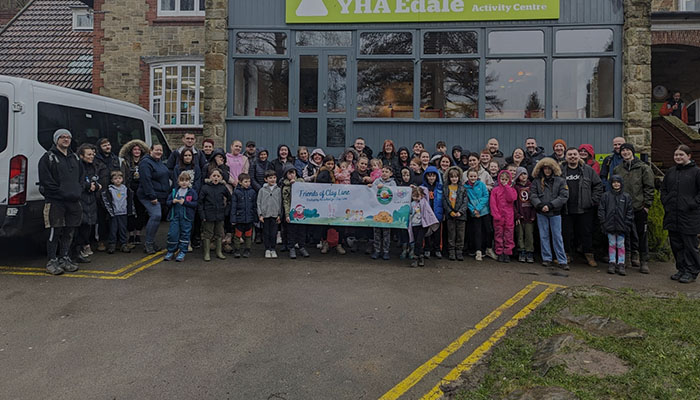
Friends of Clay Lane started after a group of residents and one Intake resident, got together to repaint the play park on Shackleton Road.
During the session, participants asked 'Why does Clay Lane not get events like other areas?' and from there, Friends of Clay Lane was born. To provide events, activities and to improve the estate for all.

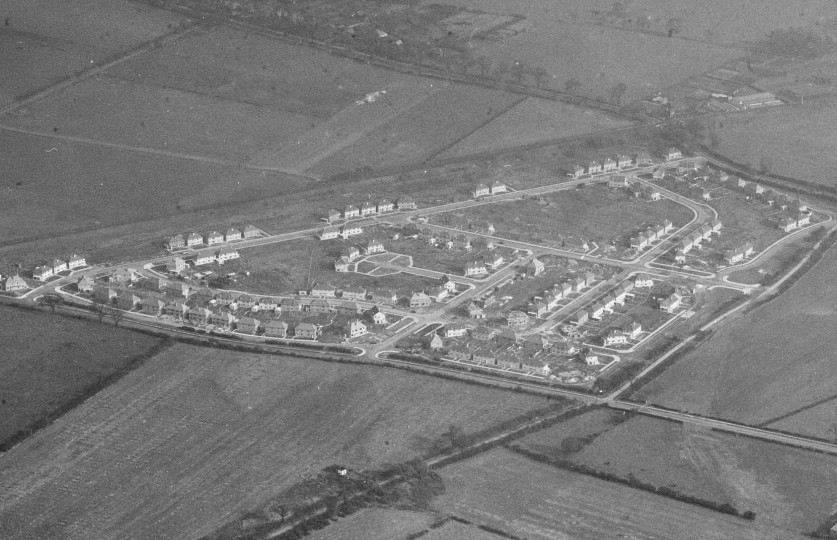
On May 14, 1947, the Estates and Housing Committee recommended applying to the Ministry of Health for permission to construct 200 Easiform homes by Messrs John Laing and Sons Ltd on the Clay Lane site.
By June 18, 1947, formal authorisation from the Ministry was granted.
On July 23, 1947, the Ministry offered an additional allocation of 100 BISF homes, prompting the Estates and Housing Committee to accept this offer for construction on Clay Lane.
By August 20, 1947, rent rates were established for tenants based on their income brackets, ensuring fair access to housing.
On September 2, 1947, the committee approved the revised layout plan for the Clay Lane Estate, with tenders subsequently invited for road and sewer construction.
By October 7, 1947, it was recommended to prioritise miners as tenants for the Easiform houses.
November 19, 1947, saw tenders accepted for the construction of 200 Easiform houses by Messrs John Laing and Sons, with approval sought from the Ministry for borrowing.
By January 21, 1948, road names for the Clay Lane Estate were proposed and approved.
In August 1948, the Ministry formally consented to the appropriation of land at Clay Lane for housing development.
On September 27, 1948, tenders for 28 properties by small builders were accepted.
By December 15, 1948, formal consent was granted to borrow funds for the construction of 92 houses.
In January 1949, tenders for electrical installations and road surfacing were accepted.
By June 15, 1949, additional funds were secured for road construction and the erection of more houses.
In October 1949, approval was sought for the construction of bungalows.

In March 1950, accommodation for a midwife was requested.
In April 1950, a polling station was established for municipal elections.
By June 1950, plans for shops were submitted for approval.
In September 1950, estimates were provided for further housing construction.
In October 1950, land was acquired for a school site.
By November 1950, formal consent was granted for additional housing.
In February 1951, a loan was secured for the construction of shops and flats.
By April 1951, rent rates for shops were fixed.
Throughout this period, various amenities and infrastructure were developed, albeit amid the challenges of ongoing construction and the initial state of the estate.